Residential Dumpster Rental Tips
Renting a dumpster for a home project can make cleanup faster and far less stressful—but only if you plan it correctly. From choosing the right size to understanding what you can toss, these residential dumpster rental tips will help homeowners avoid common mistakes, control costs, and keep projects running smoothly.
Whether you’re cleaning out a garage, remodeling a kitchen, or preparing a home for sale, a little preparation goes a long way.
1. Choose the Right Dumpster Size From the Start
One of the most common mistakes homeowners make is renting a dumpster that’s too small. Underestimating debris leads to overfilled containers or the need for an additional haul, which increases costs.
As a general guideline:
- Small cleanouts and single-room projects often need a small to mid-size dumpster
- Whole-home cleanouts, renovations, or roofing projects usually require a larger container
If you’re unsure, ask your rental provider for guidance. It’s often more cost-effective to go slightly larger than risk running out of space.
2. Understand What You Can and Can’t Throw Away
Not everything can go into a residential dumpster. Prohibited items often include:
- Liquids of any kind
- Paint, solvents, and chemicals
- Batteries and electronics
- Tires and appliances (in some areas)
- Hazardous materials
Placing restricted items in a dumpster can result in additional fees or refusal of pickup. Always ask for a list of prohibited items before loading begins.
3. Plan Where the Dumpster Will Be Placed
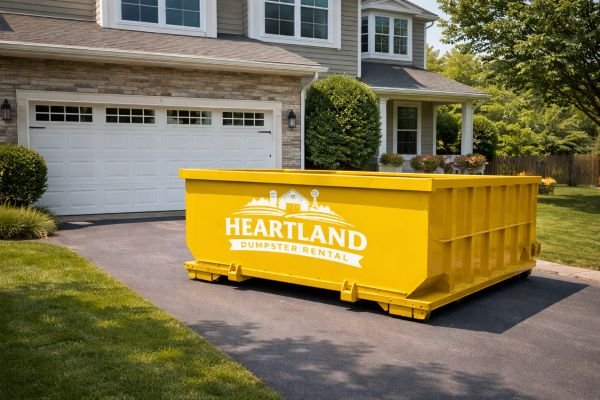
Before delivery, decide where the dumpster will go. Most residential dumpsters are placed in:
- Driveways
- Private parking areas
- Side yards (with adequate access)
Make sure the area is clear of vehicles, low-hanging branches, and overhead wires. If the dumpster must be placed on a public street, a permit may be required depending on local rules.
4. Protect Your Driveway or Surface
Dumpsters are heavy, especially when filled. To help protect driveways or paved surfaces:
- Place plywood or boards under contact points
- Avoid soft or newly paved areas
- Keep the dumpster stationary once placed
These simple steps reduce the risk of surface damage during your rental period.
5. Load the Dumpster Strategically
How you load the dumpster matters. Proper loading helps maximize space and prevents safety issues.
Best practices include:
- Break down large items when possible
- Load heavy items first and distribute weight evenly
- Fill gaps with smaller debris
- Keep materials below the top edge
Avoid piling debris above the rim, as overfilled dumpsters may not be picked up.
6. Be Mindful of Weight Limits
Even residential dumpsters include weight limits. Heavy materials like roofing shingles, concrete, dirt, and tile can exceed limits quickly.
If your project involves heavy debris, ask your provider:
- What the included weight allowance is
- Whether a smaller dumpster with multiple hauls is a better option
Understanding weight limits helps prevent unexpected overage fees.
7. Schedule Delivery and Pickup Carefully
Timing is important for residential projects. Schedule delivery close to when work begins so the dumpster doesn’t sit unused. Likewise, plan pickup soon after the project ends to avoid unnecessary rental extensions.
If your timeline changes, contact your provider early. Most companies can adjust schedules if given enough notice.
8. Keep Safety in Mind
Residential projects often involve family members, pets, and neighbors. Keep safety a priority by:
- Keeping the area around the dumpster clear
- Ensuring children and pets stay away
- Avoiding sharp or unstable debris near the top
A clean, organized work area reduces the risk of accidents.
9. Communicate With Neighbors if Needed
If the dumpster will be visible or near shared spaces, a quick heads-up to neighbors can go a long way. Clear communication helps avoid complaints and keeps projects running smoothly.
10. Work With a Local, Reliable Provider
Choosing a reputable local dumpster rental provider makes the entire process easier. A good provider will:
- Help you choose the right size
- Explain pricing clearly
- Answer questions promptly
- Deliver and pick up on time
Local companies also understand neighborhood layouts and local regulations better than national call centers.
Final Thoughts on Residential Dumpster Rental
Residential dumpster rental doesn’t have to be complicated. With the right planning, proper loading, and clear communication, you can keep your home project efficient and stress-free.
By following these tips, you’ll avoid common pitfalls, control costs, and make cleanup one less thing to worry about during your project.