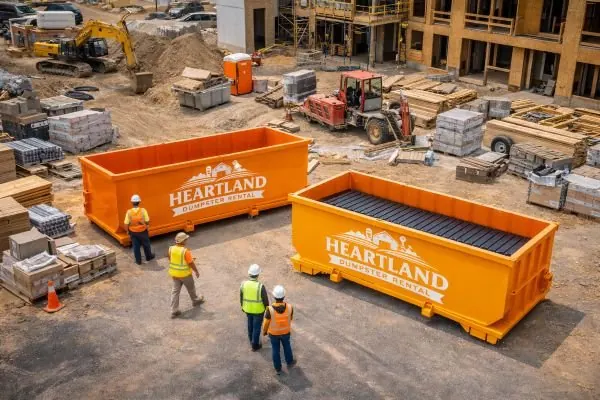
Construction dumpster rental: plan by phase
A build produces different debris at each stage: demolition rubble, framing offcuts, roofing, drywall scrap, packaging and final cleanup. Call (816) 895-7039 with the site address, the project type and the expected timeline. We line up an independent hauler that can supply the right containers and keep swaps coming as the job moves.
Sizes by stage
Demolition and heavy debris usually call for a 20-yard so the weight stays manageable. Framing and roofing go into a 30-yard. Drywall, insulation and packaging during finish work are light and bulky, which suits a 40-yard. Many jobs keep one container on site and swap it when full; bigger sites run two.
Keeping the site clean and compliant
A container that is always overflowing invites dumping from passers-by and complaints from neighbors. Schedule swaps before the box is full. Keep refused materials, such as paint, solvents, tires and batteries, out of the container entirely. If the building predates the late 1970s, test for asbestos and lead before demolition; those materials need licensed handling under state and federal rules and do not belong in a standard roll-off.
Midwest building seasons
Most Midwest building happens between spring thaw and late fall, with winter projects moving indoors. Frozen ground in January can actually make container placement easier; soft ground in March and April makes it harder. Plan placement on gravel or pavement where possible.
The construction waste disposal guide covers sorting, recycling and OSHA housekeeping. For commercial sites, see commercial dumpster rental, and for typical costs, the pricing page.
Working with a hauler on a long job
On a multi-month build, set up a simple routine with the hauler: who calls for swaps, how much notice they need, and where the replacement container goes. Ask for weight tickets with each haul so you can check overage against your allowance.