
Construction Waste Disposal Guide
Construction projects generate a wide variety of waste, and handling it properly is essential for safety, efficiency, and compliance. Whether you’re managing a small renovation or a large-scale build, understanding construction waste disposal helps keep your job site organized, reduces environmental impact, and prevents costly delays or fines. This guide walks through the types of construction waste, disposal options, and best practices to follow throughout your project.
What Is Construction Waste?
Construction waste includes materials generated during building, remodeling, renovation, and demolition projects. These materials can range from light debris to extremely heavy waste. Common examples include:
- Wood, lumber, and pallets
- Drywall and plaster
- Metal scraps
- Concrete, brick, and block
- Asphalt and roofing materials
- Packaging materials and cardboard
- Fixtures, flooring, and insulation
Properly managing these materials is a critical part of any construction project.
Why Proper Construction Waste Disposal Matters
Effective construction waste disposal is about more than just cleanup. It directly affects:
- Job site safety: Debris buildup increases the risk of injuries and accidents.
- Project efficiency: Organized waste removal keeps crews productive.
- Regulatory compliance: Improper disposal can result in fines or penalties.
- Environmental responsibility: Reducing landfill waste supports sustainability goals.
Planning waste disposal early helps avoid problems later in the project.
Common Construction Waste Disposal Methods
There are several ways to dispose of construction waste, and the best option depends on project size, debris type, and local regulations.
Roll-Off Dumpster Rentals
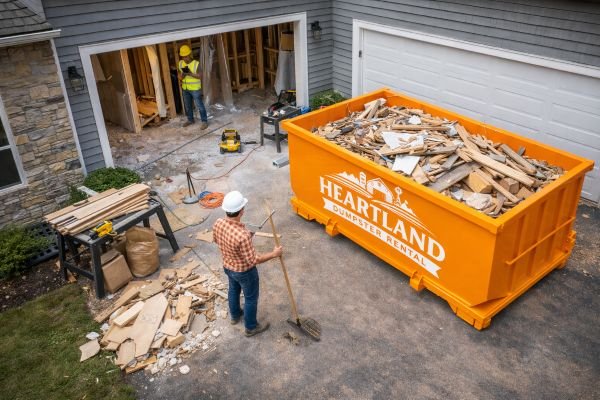
Roll-off dumpsters are one of the most common and efficient methods for construction waste disposal. They provide a centralized container for debris and are delivered directly to the job site.
Benefits include:
- Easy access for loading
- Flexible rental periods
- Suitable for large volumes of debris
- Efficient pickup and disposal
Roll-off dumpsters are ideal for most construction and renovation projects.
Recycling and Material Recovery
Many construction materials can be recycled or reused. Wood, metal, concrete, and cardboard are commonly accepted at recycling facilities. Separating recyclable materials reduces landfill use and may lower disposal costs.
Some projects choose to separate materials on-site, while others rely on disposal facilities that sort waste after pickup.
Specialized Disposal for Heavy Materials
Heavy materials like concrete, asphalt, and brick require special handling due to weight. These materials are often disposed of at dedicated facilities or recycled for use in new construction projects.
Using the correct dumpster size and following weight guidelines is essential to avoid overage fees or safety issues.
Understanding Local Disposal Regulations
Construction waste disposal rules vary by city, county, and state. Some areas require specific handling for certain materials, while others restrict disposal of hazardous or regulated items.
Common regulated materials include:
- Paints and solvents
- Chemicals and liquids
- Batteries and electronics
- Asbestos-containing materials
Always verify local regulations before disposing of restricted items to avoid fines or project delays.
Planning Construction Waste Disposal Ahead of Time
The most successful projects plan waste disposal before construction begins. This includes estimating debris volume, identifying disposal methods, and scheduling dumpster delivery and pickup.
Key planning steps include:
- Estimating the type and amount of waste
- Choosing the correct dumpster size
- Planning dumpster placement
- Scheduling pickups based on project phases
Early planning helps keep the site clean and minimizes disruptions.
Best Practices for Job Site Waste Management
Following best practices improves safety and efficiency throughout the project:
- Keep waste contained in designated dumpsters
- Distribute debris evenly to avoid overloading
- Do not mix prohibited materials with general waste
- Schedule pickups before dumpsters become overfilled
- Communicate disposal guidelines to crews
Clear rules and consistent habits make waste management easier for everyone on site.
Environmental Considerations in Construction Waste Disposal
Sustainability is becoming increasingly important in construction. Reducing waste, recycling materials, and using responsible disposal methods help lower environmental impact.
Many contractors now aim to divert a portion of construction waste from landfills by recycling or reusing materials whenever possible. This approach benefits the environment and can enhance a company’s reputation.
Choosing the Right Waste Disposal Partner
Working with a reliable dumpster rental provider simplifies construction waste disposal. An experienced provider helps with:
- Dumpster size selection
- Scheduling and logistics
- Compliance with local regulations
- Safe and timely pickup
A knowledgeable partner allows contractors to focus on building instead of waste management.
Final Thoughts on Construction Waste Disposal
Construction waste disposal is a critical part of any successful project. By understanding waste types, planning disposal methods, and following best practices, you can maintain a safer, more efficient job site.
Whether your project is large or small, proper waste management saves time, reduces costs, and supports compliance. Taking the time to plan ahead makes all the difference.